




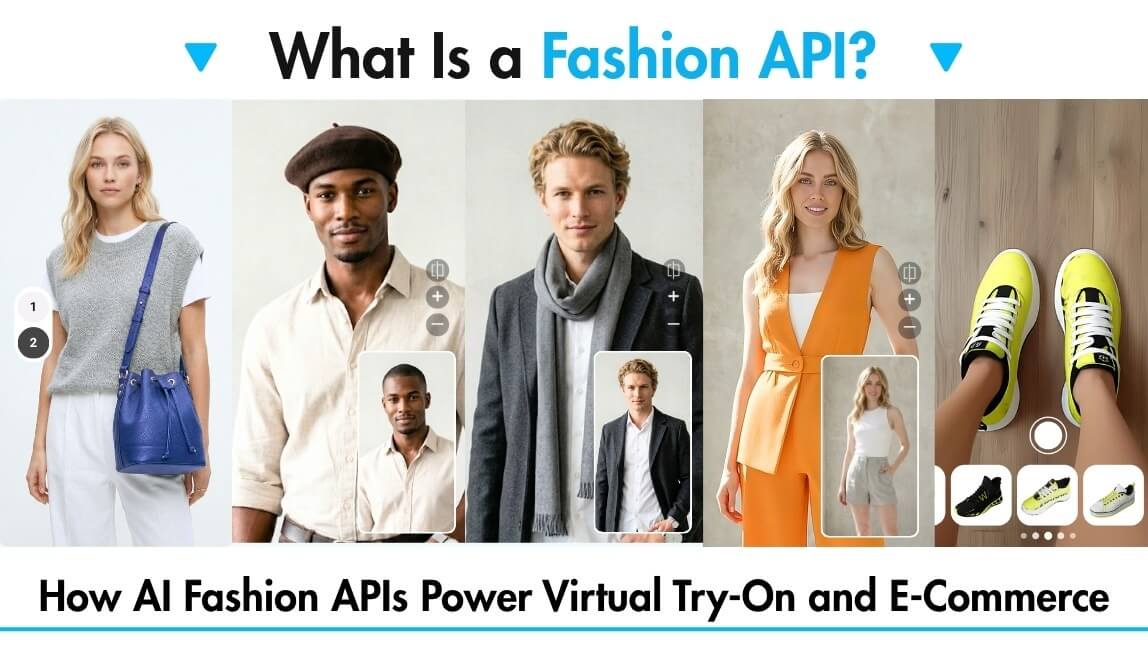
A Fashion API is an application programming interface that helps fashion brands, retailers, and developers connect websites, apps, or ecommerce platforms to fashion-related features such as product data, visual search, clothing recognition, AI styling, product visualization, virtual try-on, and personalized shopping experiences. In AI-powered fashion commerce, these APIs can also support virtual try-on for clothes, shoes, bags, jewelry, scarves, hats, and other accessories.
As online fashion shopping becomes more visual and personalized, Fashion APIs are becoming an important part of modern retail technology. They help brands move beyond static product photos and create interactive experiences where shoppers can explore products, preview looks, and make more confident purchase decisions.
This matters because product visualization is not just a design feature. It can affect conversion, engagement, and returns. In the U.S., retailers estimated that 16.9% of annual sales would be returned in 2024, totaling $890 billion in retail returns. Online returns continue to be a major pressure point, with NRF estimating that 19.3% of online sales would be returned in 2025.
Key Takeaways
- A Fashion API connects digital platforms to fashion-related data, AI tools, product experiences, or shopping features.
- A Fashion AI API can support virtual try-on, outfit generation, product visualization, AI styling, and ecommerce personalization.
- Virtual try-on is one of the most practical Fashion API use cases because it helps shoppers visualize products before buying.
- U.S. retailers face major return pressure, making better product visualization and pre-purchase confidence more important.
- Brands can use Fashion APIs to launch AI-powered shopping experiences faster than building the technology from scratch.
What Is a Fashion API?
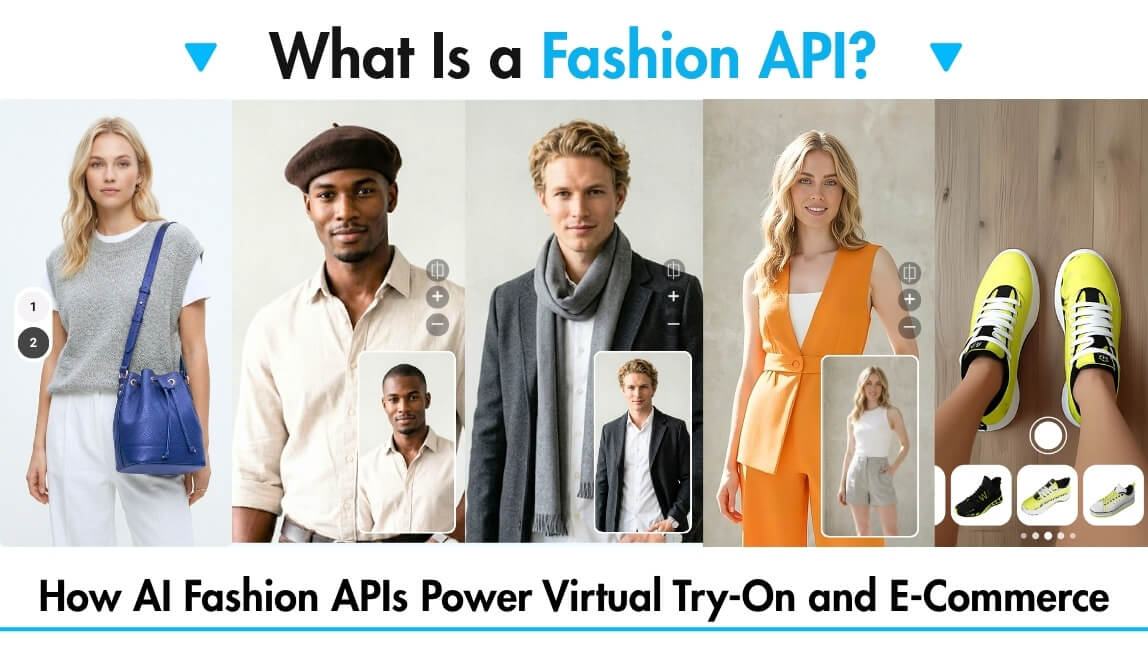
A Fashion API allows developers to add fashion-related functionality to a website, mobile app, ecommerce platform, marketplace, or retail system.
Depending on the provider, a Fashion API can support different use cases, including product catalog data, size information, clothing recognition, visual search, styling recommendations, virtual try-on, AI-generated fashion images, or product personalization.
In simple terms: A Fashion API connects your digital product to fashion technology, so your platform can display, analyze, recommend, generate, or visualize fashion items more effectively.
For example, an ecommerce brand may use a Fashion Product API to manage product data, a Clothing Recognition API to identify garments in images, or an AI Virtual Try-On API to let shoppers preview how items look before purchase.
Common Types of Fashion APIs
Fashion API is a broad category. Some APIs focus on product data, while others focus on AI-powered shopping experiences.
Why Fashion APIs Matter for Ecommerce Brands
Fashion ecommerce depends heavily on visual confidence. Shoppers want to understand how a product looks, fits, matches their style, or works with other items before buying.
That is difficult to achieve with static product photos alone. When shoppers cannot clearly visualize a product before checkout, they may feel less confident about completing the purchase.
This is especially important in online fashion, where product appearance, fit, styling, and personal preference can strongly influence buying decisions. A better pre-purchase experience can help shoppers evaluate products more clearly before they add items to cart.
Fashion APIs can help brands improve the pre-purchase experience by adding richer product information, more personalized recommendations, and visual tools such as virtual try-on. While no API can eliminate returns completely, better visualization can help shoppers make more informed decisions before checkout.
How AI Fashion APIs Are Changing Online Shopping
A Fashion AI API is a type of Fashion API that uses artificial intelligence to power fashion-related experiences. Instead of only sending or retrieving product data, a Fashion AI API can analyze images, generate visuals, recommend products, or create personalized try-on experiences.
AI fashion APIs can support:
- Virtual try-on for clothes, shoes, accessories, jewelry, or beauty products
- AI outfit generation
- Product visualization
- Image-based styling recommendations
- Visual search
- Clothing recognition
- Personalized ecommerce experiences
- Campaign and product content generation
This is where AI becomes especially useful for fashion ecommerce. It can help shoppers move from “I like this product” to “I can imagine how this product looks on me.”
Perfect Corp.’s AI Clothes Changer API shows how advanced this category is becoming. The technology is designed to help brands add realistic clothes virtual try-on experiences to websites, apps, and ecommerce platforms, with support for detailed material and pattern rendering, true body-shape matching, flexible image upload options, and RESTful API integration.
How Virtual Try-On Fits Into the Fashion API Ecosystem
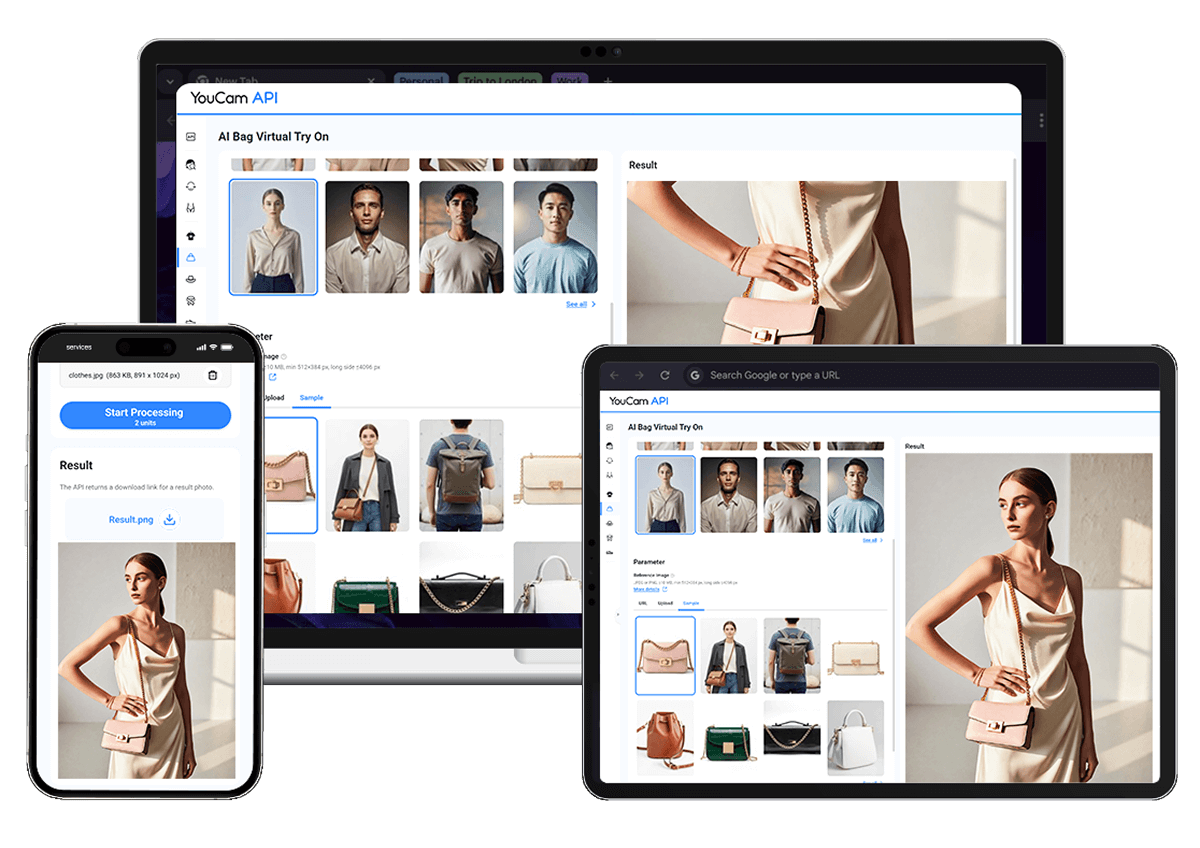
Virtual try-on is one of the most practical AI fashion API use cases because it connects directly to shopping behavior. It helps users preview fashion items before buying, making ecommerce feel more visual, interactive, and personalized. Depending on the product category, this can include clothes, shoes, bags, rings, necklaces, scarves, hats, and other accessories.
A Fashion API ecosystem can include many product categories, not only clothes. For example, brands can use AI and AR APIs to let shoppers preview apparel, shoes, bags, rings, necklaces, scarves, hats, and other fashion items.
Perfect Corp.’s fashion API ecosystem includes multiple virtual try-on solutions across fashion and accessories, including AI clothes changing, AI shoes virtual try-on, AI bag virtual try-on, AI ring virtual try-on, AI necklace virtual try-on, AI scarf virtual try-on, and AI hat virtual try-on.
Apparel and Clothes Virtual Try-On
Clothes virtual try-on helps shoppers preview outfits from a single photo or product image. This is useful for ecommerce brands, shopping apps, styling platforms, and campaign experiences.
Shoes Virtual Try-On
Shoes virtual try-on allows shoppers to preview footwear in a more visual way, helping brands bring product discovery closer to a real styling experience.
Bag Virtual Try-On
Bag virtual try-on helps shoppers see how a bag may look with an outfit, making it useful for fashion retailers, luxury brands, and accessory ecommerce experiences.
Jewelry Virtual Try-On
Ring and necklace virtual try-on APIs support jewelry visualization, helping shoppers preview accessories before purchase.
Scarf and Hat Virtual Try-On
Scarf and hat try-on APIs support styling and accessory previews, helping brands create more complete fashion visualization experiences.
Related Fashion Virtual Try-On APIs:
- AI Clothes Changer API
- AI Shoes Virtual Try-On API
- AI Bag Virtual Try-On API
- AI Ring Virtual Try-On API
- AI Necklace Virtual Try-On API
- AI Scarf Virtual Try-On API
- AI Hat Virtual Try-On API
Virtual Try-On: One of the Most Valuable Fashion AI API Use Cases
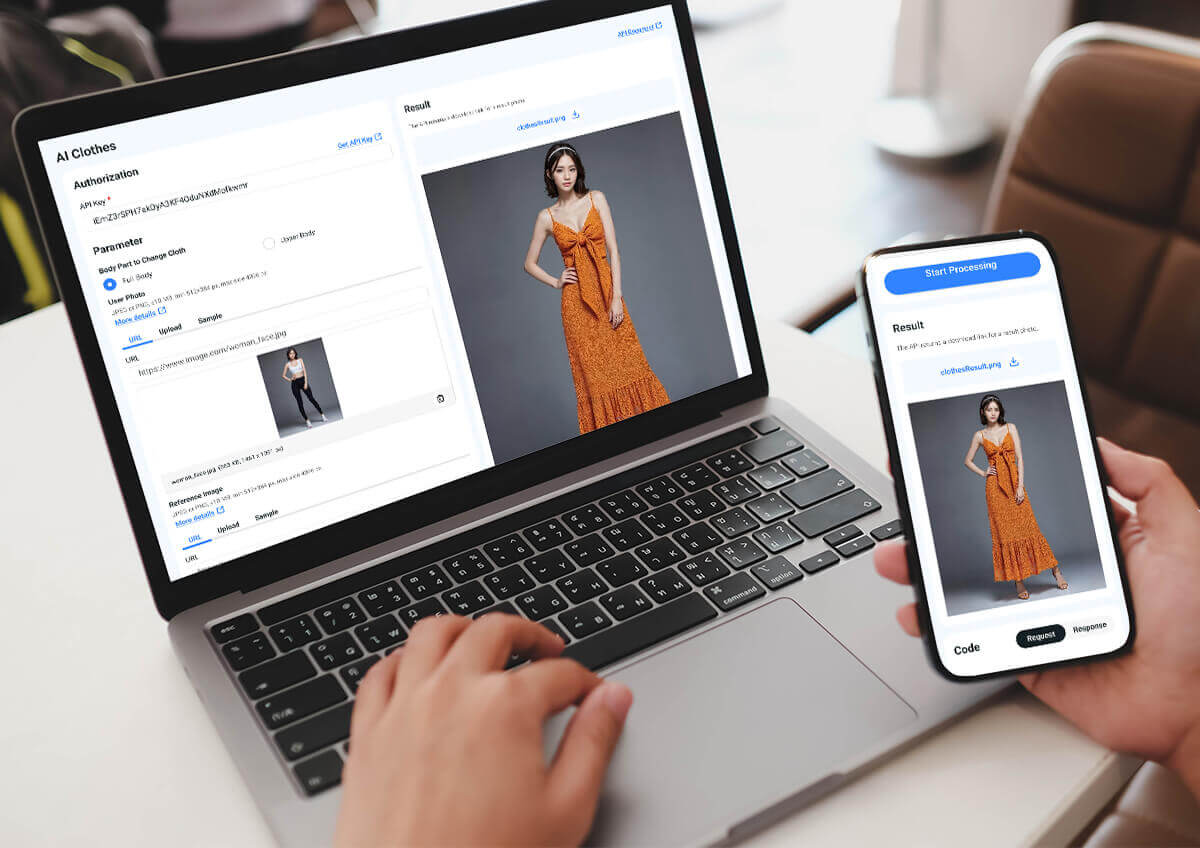
Virtual try-on is valuable because it solves one of the biggest online shopping problems: shoppers cannot physically try the product before buying.
Instead of relying only on model photos, virtual try-on lets users see clothing or accessories in a more personalized context.
U.S. retail adoption also shows how important this experience has become. Walmart launched virtual fitting room technology with a “Choose My Model” experience that allowed customers to select from 50 models across different heights, body shapes, skin tones, and sizes from XS to XXXL. Walmart later introduced “Be Your Own Model,” allowing shoppers to use their own photos to visualize how clothing may look on them.
Google has also expanded AI-powered apparel try-on. In 2025, Google said shoppers could virtually try billions of apparel listings on themselves by uploading a single image.
For fashion brands, this confirms a clear direction: shoppers increasingly expect online shopping to be visual, personalized, and interactive.
What Results Can Brands See from Virtual Try-On?
Results vary by category, implementation, traffic quality, product type, and user experience. However, public case studies and industry benchmarks show that virtual try-on, AR, and interactive product visualization can support stronger engagement, conversion, and return-related outcomes.
Shopify reported that merchants adding 3D content saw a 94% conversion lift on average, while Zalando reported observing up to a 40% reduction in return rates with its virtual fitting room technology during testing. Perfect Corp. case studies also show strong adjacent try-on results in beauty, including a 300% increase in sales conversion rates for NARS and a 200% boost in customer engagement for M·A·C.
These examples should not be read as guaranteed outcomes for every fashion brand. Instead, they show why brands are investing in interactive product visualization, virtual try-on, and AI-powered shopping experiences.
Fashion API vs Fashion Product API vs Fashion AI API
The terms Fashion API, Fashion Product API, and Fashion AI API are related, but they are not exactly the same.
If your goal is to manage a product catalog, a Fashion Product API may be enough. If your goal is to create a more visual and personalized shopping experience, a Fashion AI API or AI Virtual Try-On API is usually more relevant.
How a Fashion API Works in a Retail Tech Stack
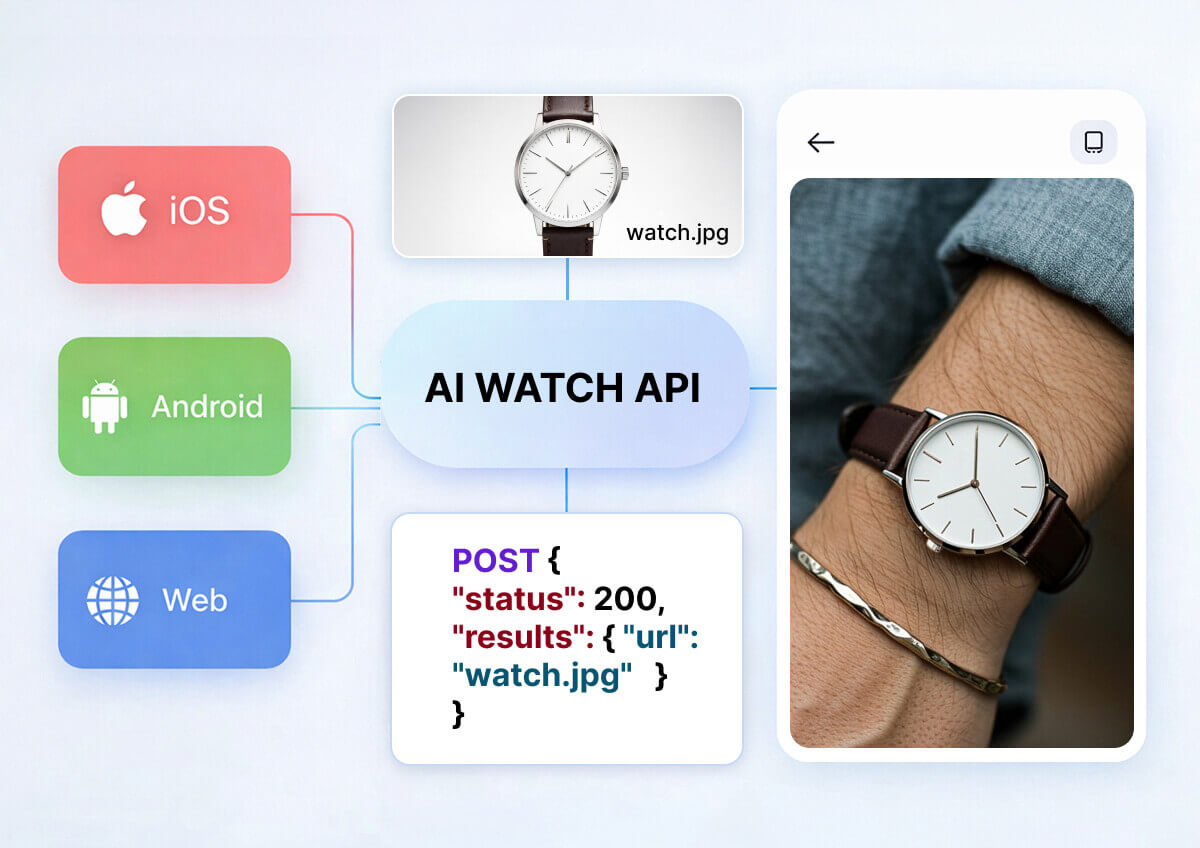
A Fashion API works by connecting your platform to a specific fashion-related service or capability.
A typical workflow may look like this:
- A shopper interacts with your website, app, or ecommerce product page.
- Your platform sends data, images, or product information to the Fashion API.
- The API processes the request.
- The API returns product data, recommendations, recognition results, or generated visuals.
- Your frontend displays the result to the shopper.
- The shopper continues to a product page, cart, checkout, saved look, or sharing action.
For AI-powered virtual try-on, the workflow usually includes a user image, a product image or asset, an API request, and a generated try-on result.
Perfect Corp.’s AI Clothes Changer API, for example, is positioned as a virtual try-on clothes API that supports realistic clothing visualization, detailed material and pattern rendering, true body-shape matching, flexible image upload options, RESTful API integration, and flexible API plans.
How to Choose the Right Fashion API
The best Fashion API depends on your use case. A brand building a product catalog experience has different needs from a developer building an AI-powered virtual fitting room.
When evaluating a Fashion API, consider:
- Use case: product data, recognition, styling, virtual try-on, or image generation
- Image quality: realistic output, material rendering, and product detail preservation
- Category support: clothes, shoes, bags, jewelry, accessories, beauty, or mixed fashion categories
- Developer experience: documentation, API structure, testing options, and integration workflow
- Speed and scalability: response time, usage limits, and production readiness
- Data privacy: how user images and product assets are handled
- Commercial usage rights: whether outputs can be used in ecommerce or marketing experiences
- Support: technical support, enterprise guidance, and onboarding options
- Testing access: API playground, demo, trial, or initial credits
For ecommerce brands, the strongest Fashion APIs are usually the ones that support both business goals and technical implementation. The API should help the brand create a better customer experience while giving developers a reliable way to build and scale.
Free Fashion API vs Enterprise Fashion API
Some developers search for a free Fashion API when they are testing an idea, building a prototype, or comparing providers. Free APIs, demos, playground access, or trial credits can be useful during early evaluation.
However, production ecommerce experiences usually need more than basic API access.
Before choosing a Fashion API for production, brands and developers should evaluate:
- Image quality
- Processing speed
- API stability
- Usage limits
- Commercial rights
- Privacy and data handling
- Documentation
- Developer support
- Scalability
- Category coverage
- Integration flexibility
A free Fashion API or trial option can help teams validate a concept, but enterprise fashion platforms usually need stronger reliability, better support, and scalable infrastructure.
Build AI Fashion Experiences with Perfect Corp.

Fashion APIs are becoming an important part of ecommerce because they help brands create more interactive, personalized, and visual shopping experiences. From clothes and shoes to bags, rings, necklaces, scarves, and hats, AI and AR-powered APIs can help shoppers preview products before purchase.
Perfect Corp.’s AI and AR API ecosystem helps brands and developers integrate virtual try-on experiences across beauty and fashion categories, including clothes, shoes, bags, rings, necklaces, scarves, hats, makeup, skincare, and more.
For apparel-focused experiences, the AI Clothes Changer API helps teams add virtual try-on clothes technology to websites, apps, ecommerce platforms, and digital shopping experiences.
- Try the YouCam API Playground: Test AI fashion and beauty APIs before integration.
- Contact Us: Talk to our team about custom integration needs, usage volume, or enterprise requirements.
Frequently Asked Question About Fashion APIs
What is a Fashion API?
A Fashion API is an application programming interface that connects websites, apps, ecommerce platforms, or retail systems to fashion-related features. These features may include product data, visual search, clothing recognition, AI styling, virtual try-on, product visualization, or personalized shopping experiences.
What is a Fashion AI API?
A Fashion AI API is a fashion-focused API that uses artificial intelligence to power digital shopping or product experiences. It can support virtual try-on, outfit generation, fashion image creation, styling recommendations, clothing recognition, and ecommerce personalization.
What is the difference between a Fashion API and a Fashion Product API?
A Fashion API is a broad category that can include product data, AI tools, virtual try-on, styling, recognition, and shopping features. A Fashion Product API usually focuses more specifically on product catalog data, such as product names, categories, sizes, colors, prices, inventory, and product attributes.
Can a Fashion API power virtual try-on?
Yes. An AI Virtual Try-On API is a type of Fashion AI API that allows users to preview fashion items digitally. Depending on the API, it may support clothes, shoes, bags, rings, necklaces, scarves, hats, beauty products, or other shoppable items.
What is the best Fashion API for ecommerce?
The best Fashion API for ecommerce depends on the brand’s goal. For product catalog management, a Fashion Product API may be the best fit. For product visualization and interactive shopping, an AI Virtual Try-On API or Fashion AI API may be more useful. Brands should evaluate image quality, API documentation, category support, scalability, privacy, commercial rights, and testing options.
Is there a free Fashion API?
Some providers may offer free trials, demos, playground access, or limited testing credits. A free Fashion API can be useful for early testing, but production ecommerce experiences usually require stable infrastructure, reliable image quality, commercial usage rights, privacy controls, documentation, support, and scalable usage plans.
How can fashion brands use AI APIs?
Fashion brands can use AI APIs to create virtual try-on experiences, generate outfit previews, improve product visualization, support styling recommendations, personalize shopping journeys, create campaign visuals, or help shoppers make more confident purchase decisions online.


